
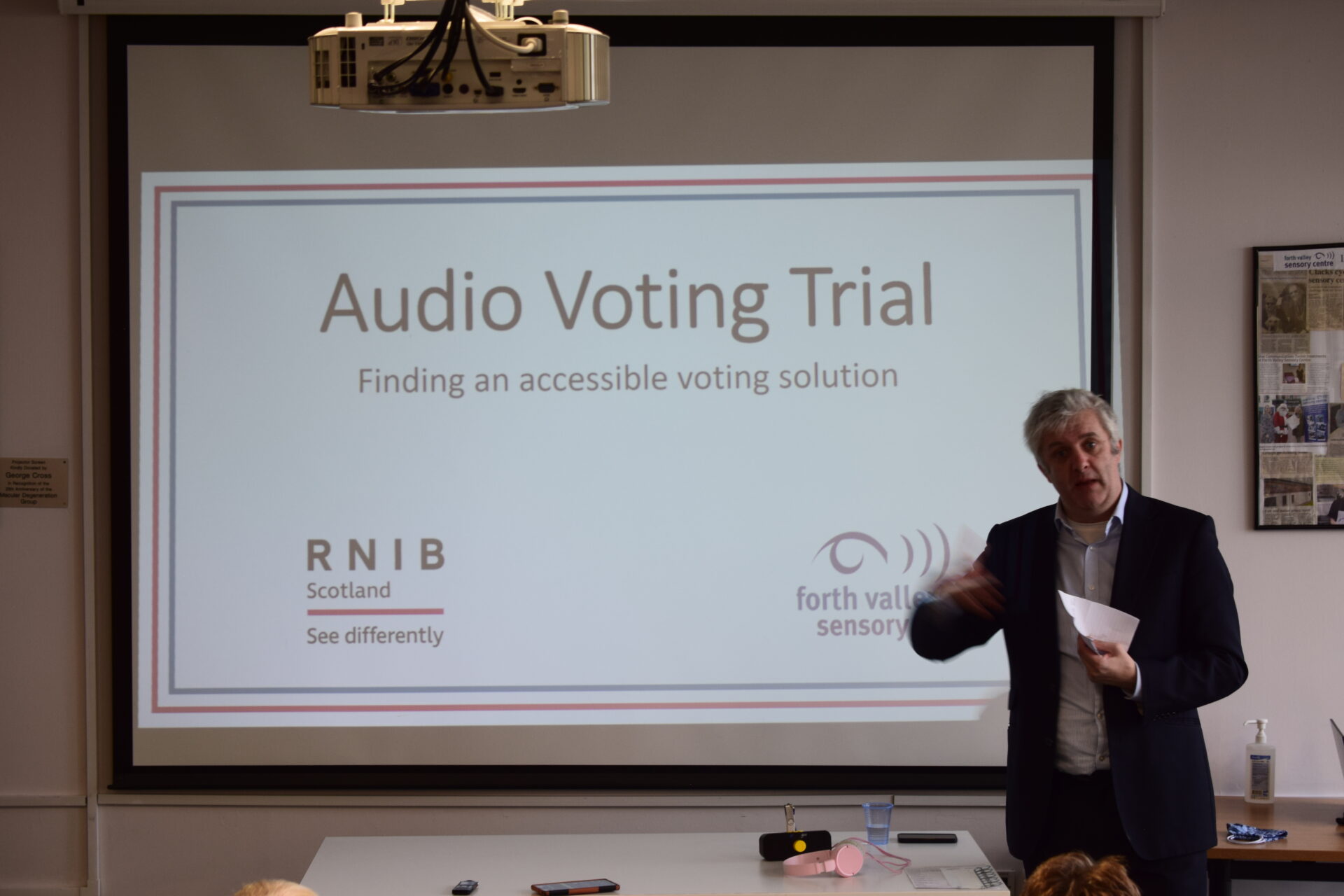
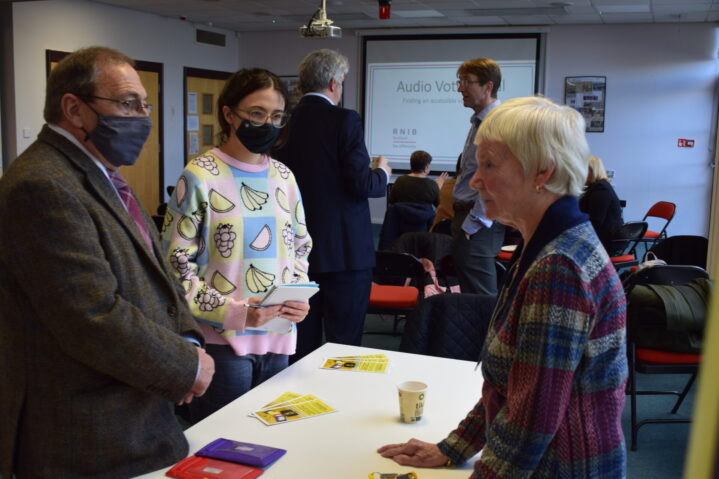
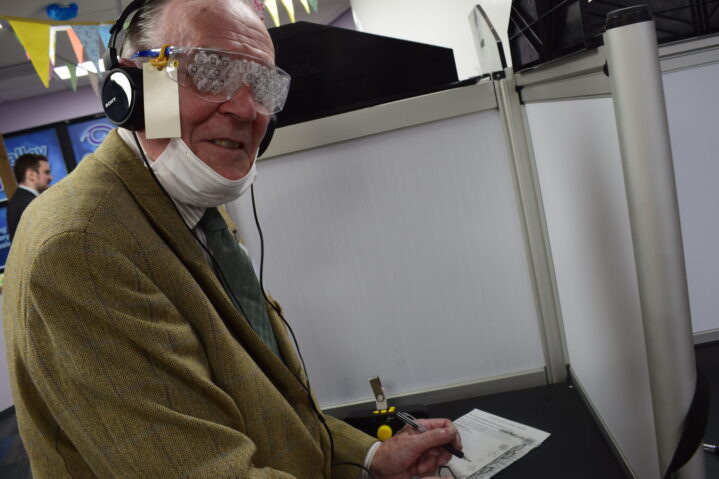
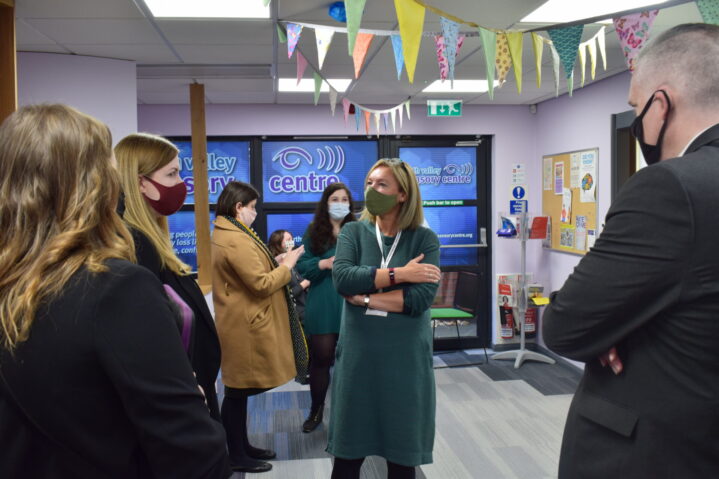
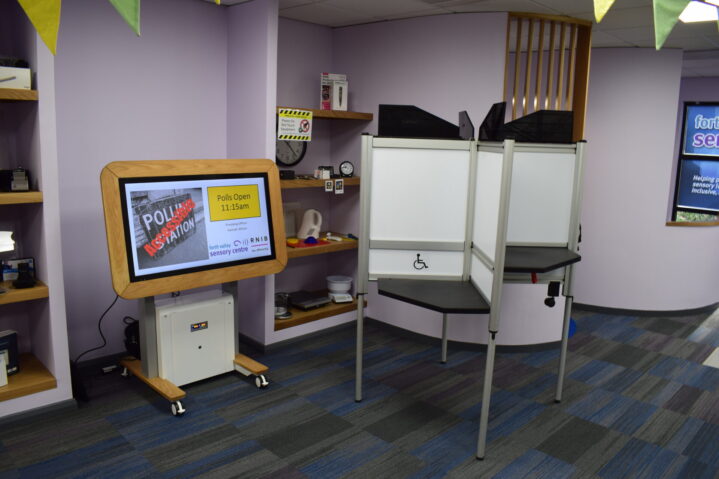
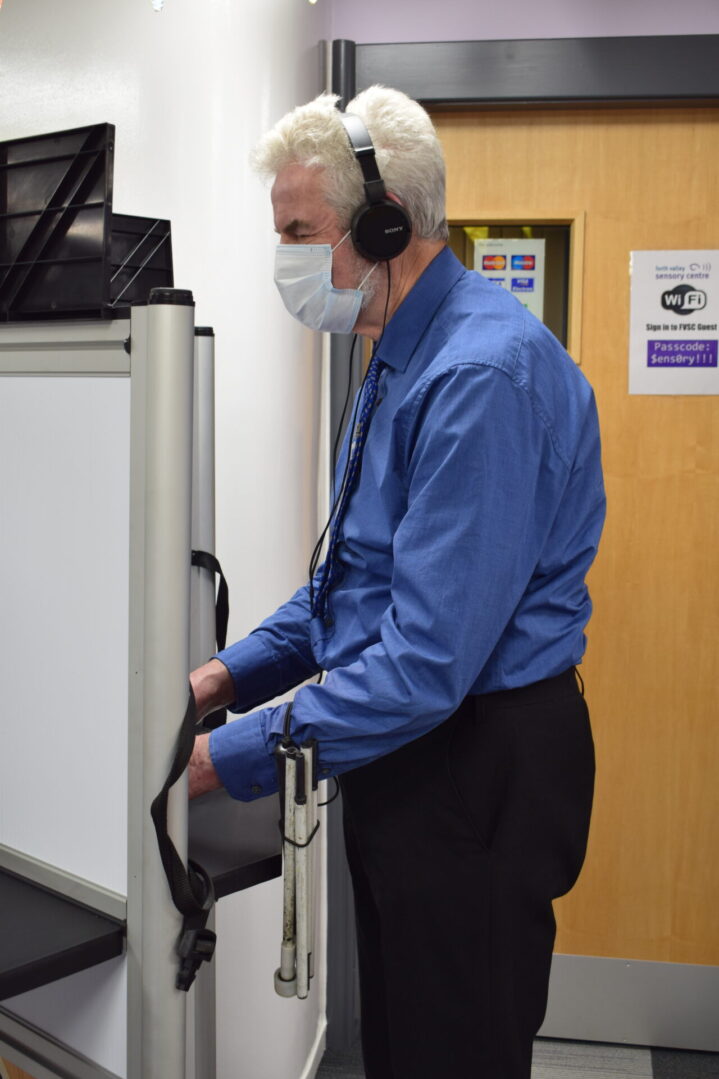
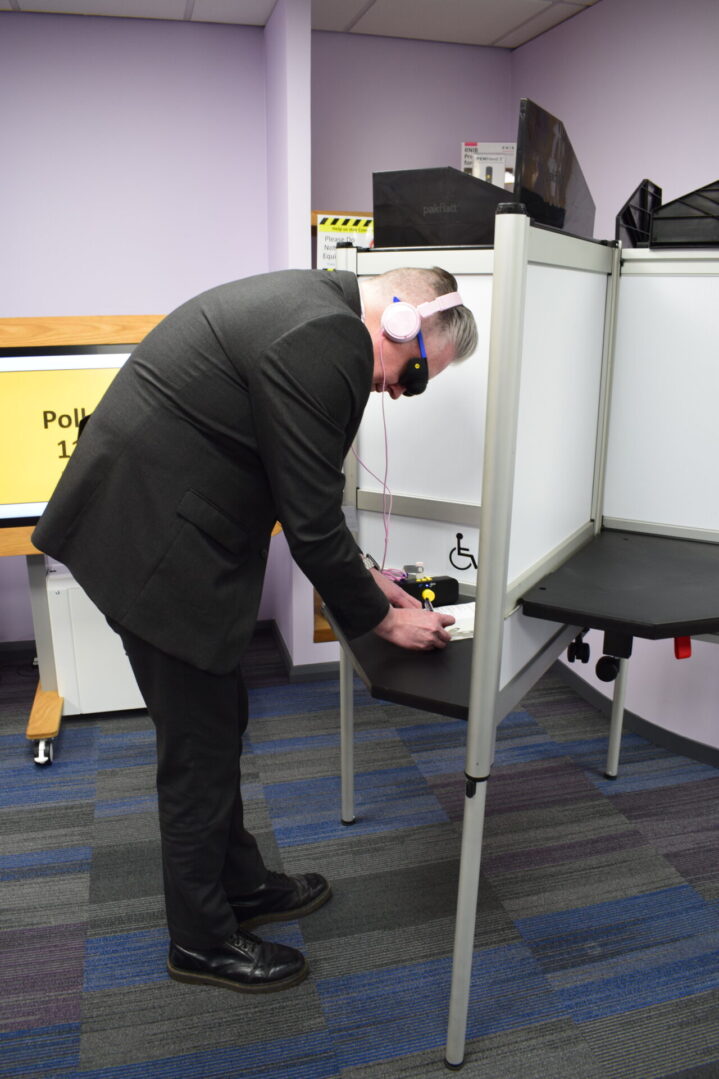
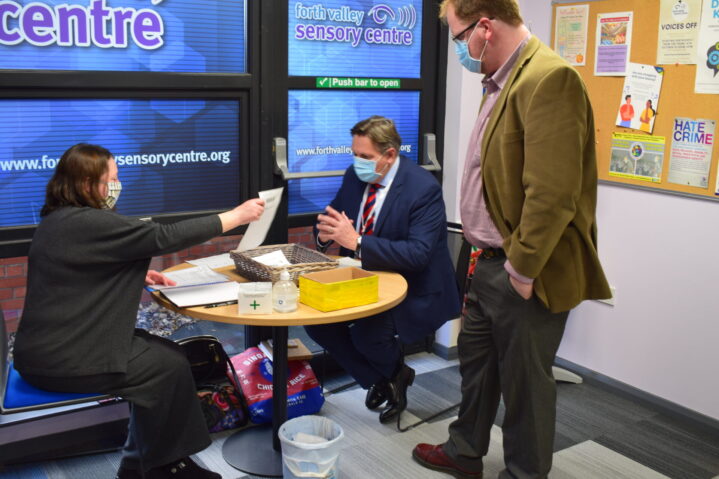
MSPs, local authority councillors and an MP cast their ballot in a mocked-up polling booth at Forth Valley Sensory Centre and found out what it’s like trying to vote in secret at the ballot box if you’re blind or partially sighted.
Attendees, who spanned the political spectrum, wore special spectacles that simulate different sight loss conditions. They then experienced the frustration of trying to vote in secret when you are visually impaired.
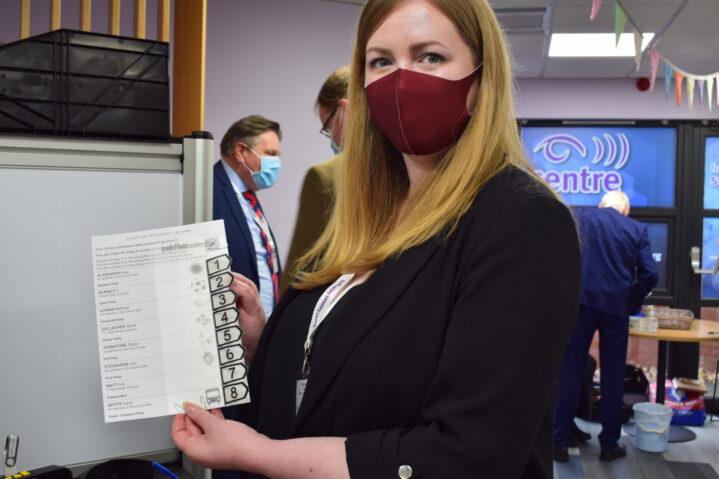
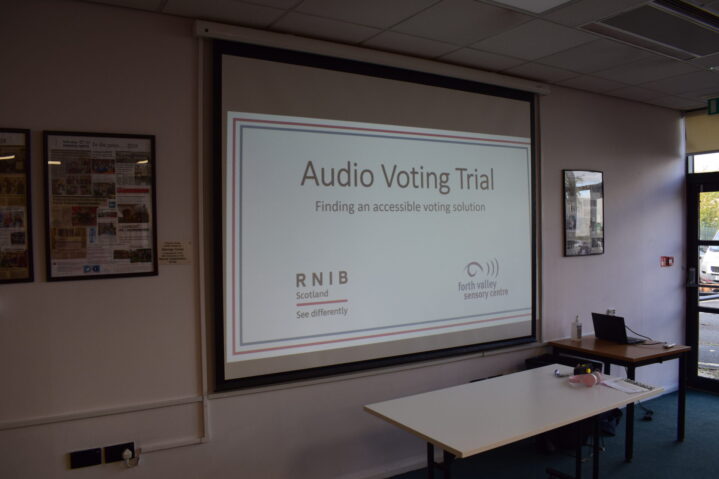
To help them, they will have the Tactile Voting Device currently in use, a thin transparent plastic template that fits over the ballot paper, and try out a new audio voting device that reads out the names of candidates and where they are on the ballot-paper.
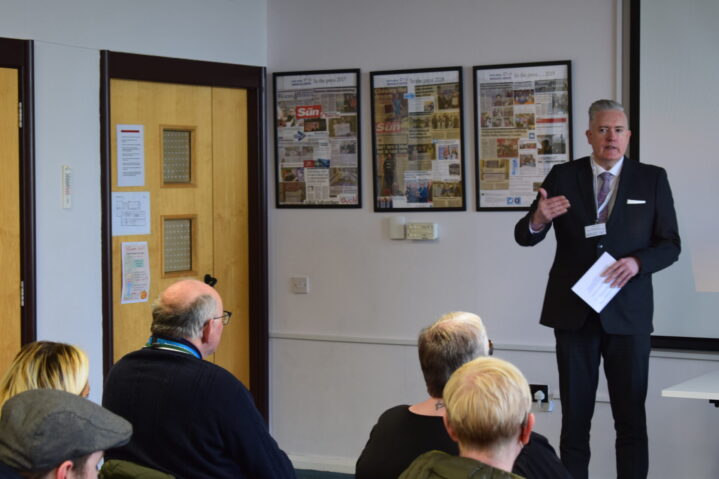
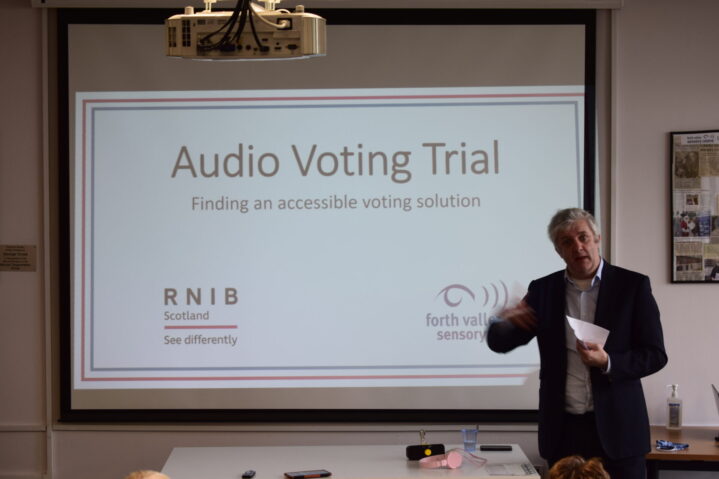
George Adam MSP, Minister for Parliamentary Business, introduced the event saying.
“Ensuring elections are as accessible as possible is of vital importance to the Scottish Government and it’s great to have this opportunity to listen to the experiences of voters,” he said.
“Everyone should feel confident casting their votes independently and in secret. Events like this, where voters can come together with politicians, policymakers and electoral professionals, will ensure we continue to improve the experience of those exercising their fundamental democratic rights.”
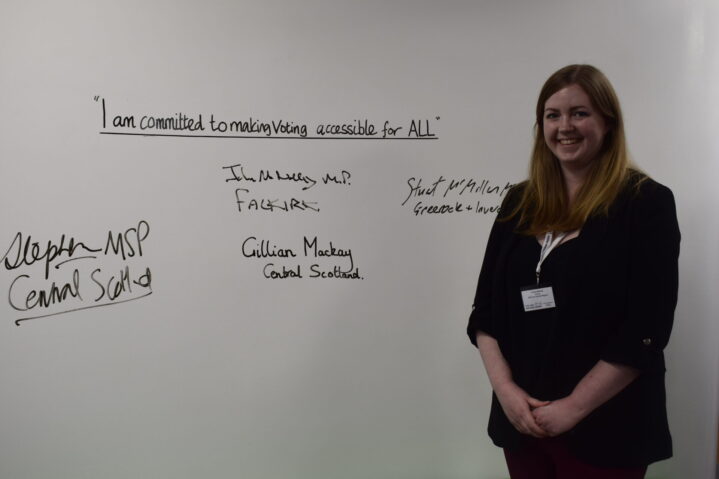
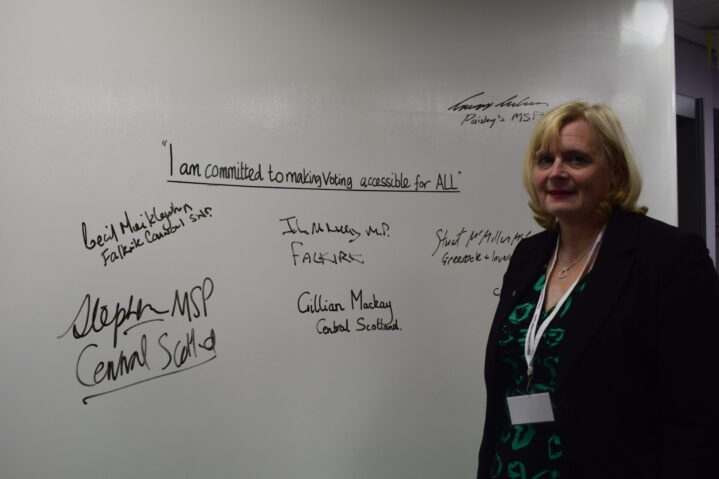
Those taking part include Falkirk MP John McNally, Central Scotland MSPs Stephen Kerr and Gillian Mackay, and a representative from Falkirk East MSP Michelle Thomson’s office, as well as Falkirk Councillor Robert Bisset. Representatives from the wider area, including Glasgow Councillor Robert Mooney were also present to look at the benefits of the system.
The event, organised by Forth Valley Sensory Centre and national sight loss charity RNIB Scotland, aims to underline how difficult it can still be to vote in private and with confidence if you have a visual impairment. Currently, around 178,000 people live in Scotland with a significant degree of sight loss.
Terry Robinson (71) from Glasgow said: “Having been theoretically enfranchised since 1968 when I was 18 years old, I’ve yet to realise my democratic right to cast a totally independent vote. At worst, I’ve had to ask a stranger to mark the paper for me. By default, I get my vision impaired partner to use what sight she has to mark the paper.
“In between these options, I’ve been offered a template and been told the order of candidates on the paper. So, whilst I can mark this paper, I still have no guarantee that the paper has been put into the template the right way up, or that the correct order of candidates has been explained to me.
“At the age of 71, I’m still looking forward to the day, which should have arrived some time ago, when I can cast a totally independent vote – a basic right which is afforded to the vast majority of others.”
Terry was one of several blind and partially sighted people to take part with Falkirk, Stirling and Clackmannanshire all represented.
James Adams, director of RNIB Scotland, said: “Voting independently and confidentially is one of the basic rights of our democracy. But we know that blind and partially sighted people still experience problems doing so. One person, for instance, told us the ballot paper for his Scottish Parliament regional list had 16 entries and was too long for the standard 12-box Tactile Voting Device template to cover.
“RNIB Scotland and Forth Valley Sensory Centre have been working with the Scottish Government Elections Team and the Electoral Commission in Scotland to explore alternative voting methods and how polling stations can be made better.”
Jacquie Winning, chief executive of Forth Valley Sensory Centre, said: “The fact that blind and partially sighted people are still not equal in today’s society is a huge blot on our democratic process. We are looking forward to finding a solution that will finally help people with visual impairments vote independently and enjoy the same rights sighted people have had since 1872.”
A UK-wide survey by RNIB after the 2019 General Election found that just 13 per cent blind voters, and only 44 per cent of partially sighted voters, questioned felt they could vote independently and in secret under the present voting arrangements.
The existing voting arrangements in the UK were declared unlawful by the High Court in 2019. In his judgement, Mr Justice Swift said: “Enabling a blind voter to mark ballot papers without being able to know which candidate they are voting for is a parody of the electoral process”. He added that any device used as an aid “must allow the blind voter to mark the ballot paper against the name of their candidate of choice…without any need for assistance”.
The Electoral Commission for Scotland and the Electoral Management Board for Scotland were also present at the event as observers. You can listen to the thoughts of George Adam MSP in our podcast here.






0 comments on “Equality at the ballot box” Add yours →