
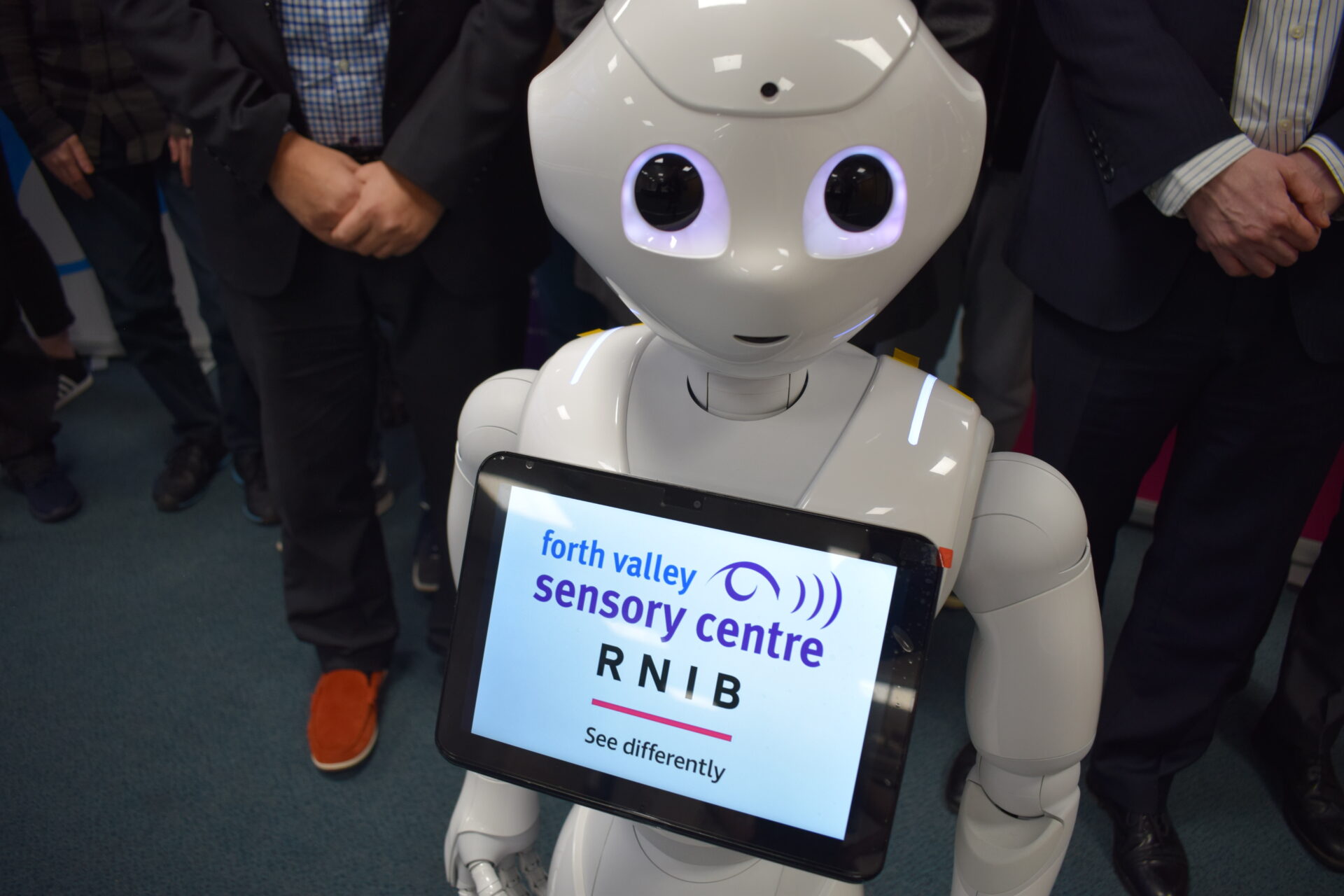
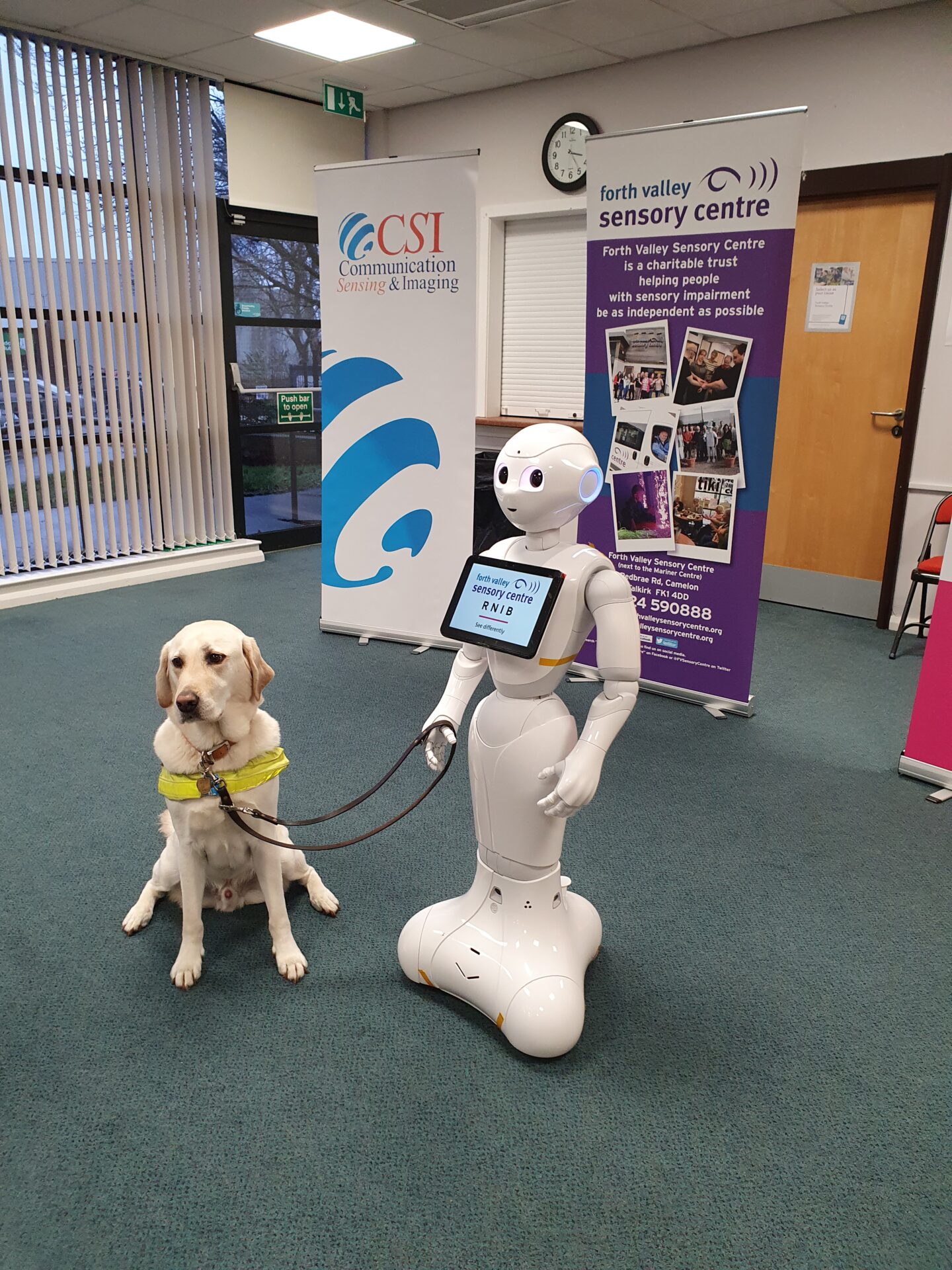
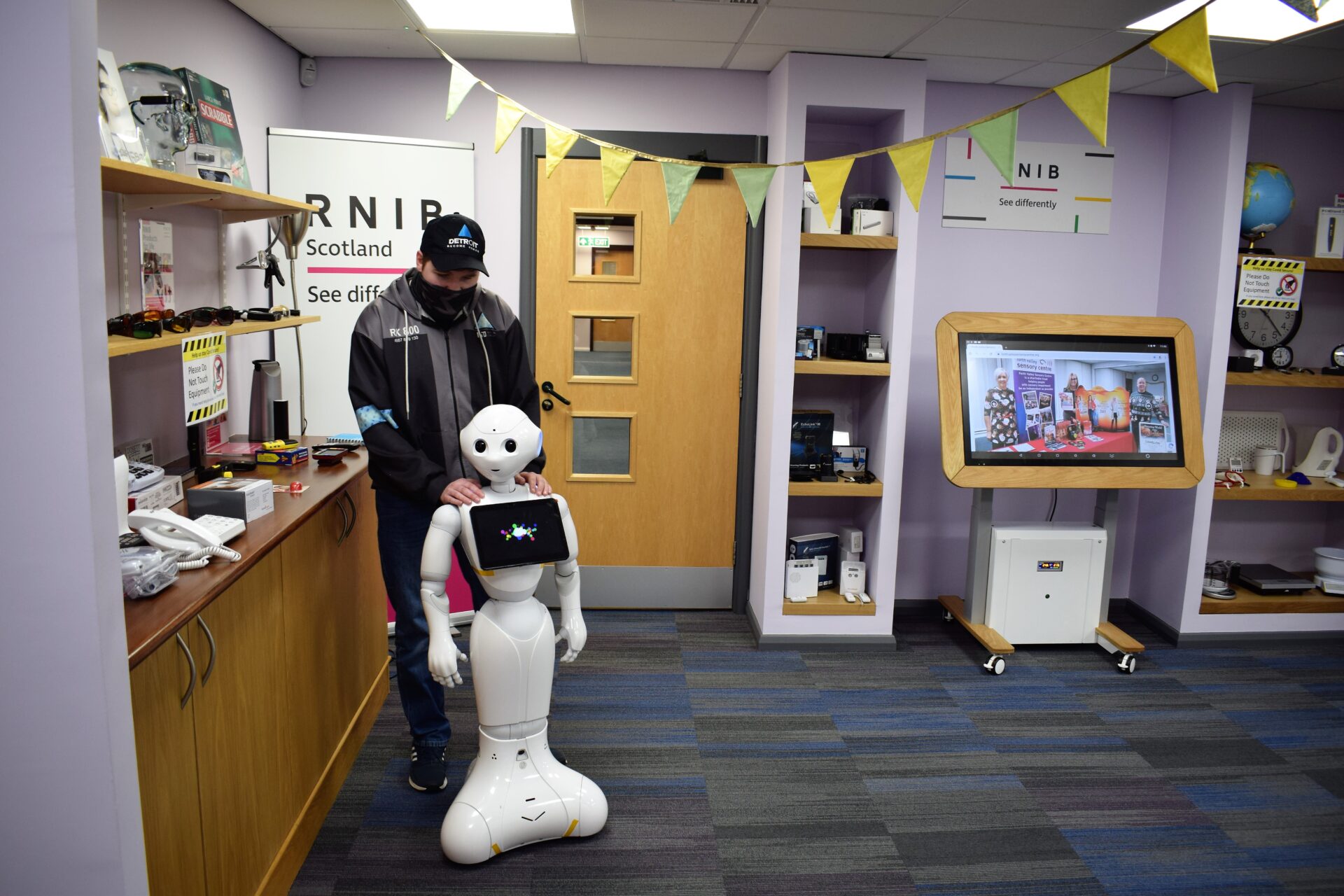
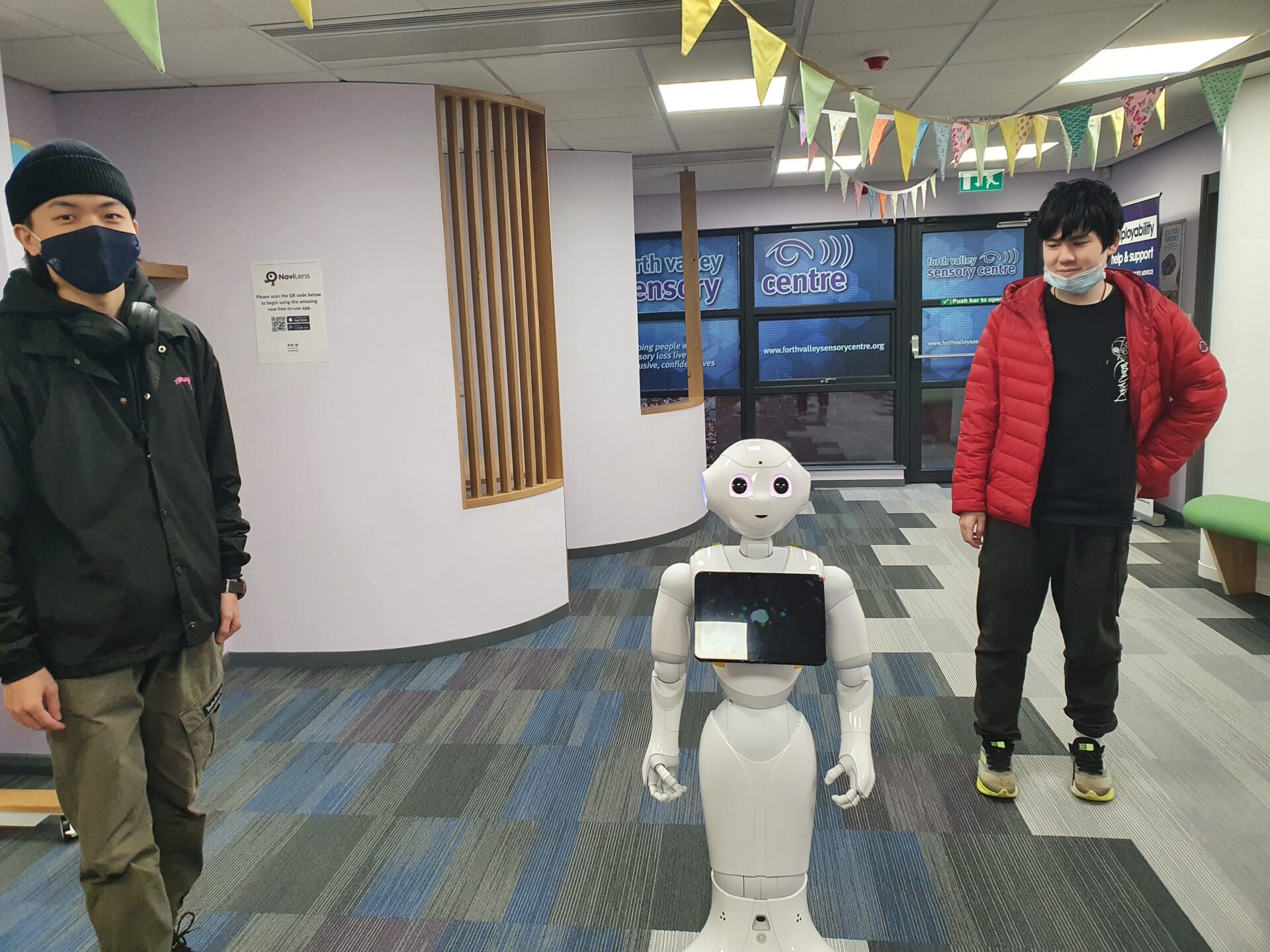
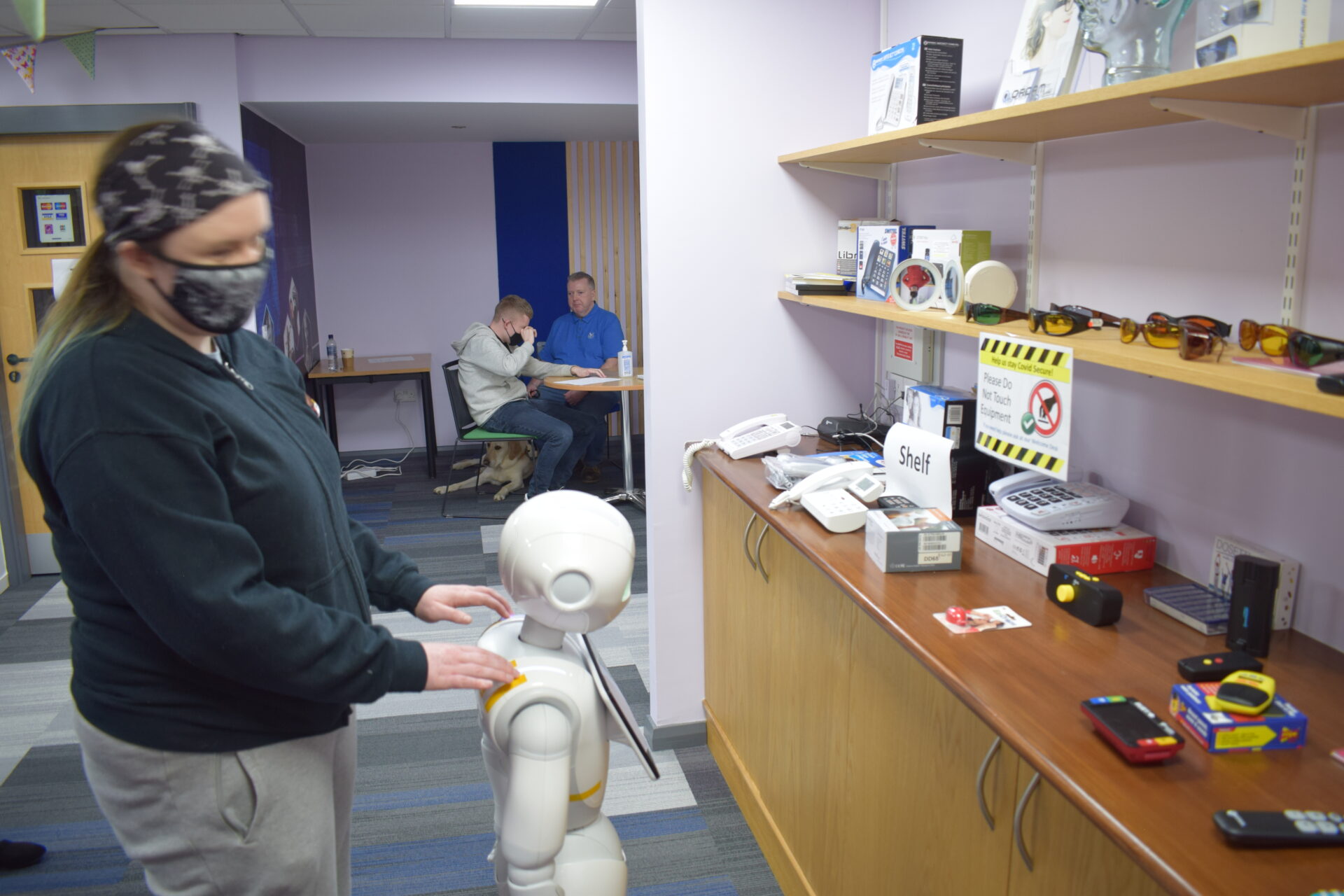
Forth Valley’s blind and partially sighted community got a glimpse of the future today when staff and research students from The University of Glasgow demonstrated ‘Pepper’ a robot specially created to guide people with sight loss around buildings.
Designed by the Communication, Sensing and Imaging (CSI) Research Group, at James Watt of School of Engineering, University of Glasgow, Pepper is able to ‘learn’ the layout of a building, avoid obstacles and even recognise different objects so they can guide a blind person to exactly what they need. The CSI Research Group is led by Muhammad Ali Imran, Professor of Communication System and is also a Dean of University of Glasgow UESTC.
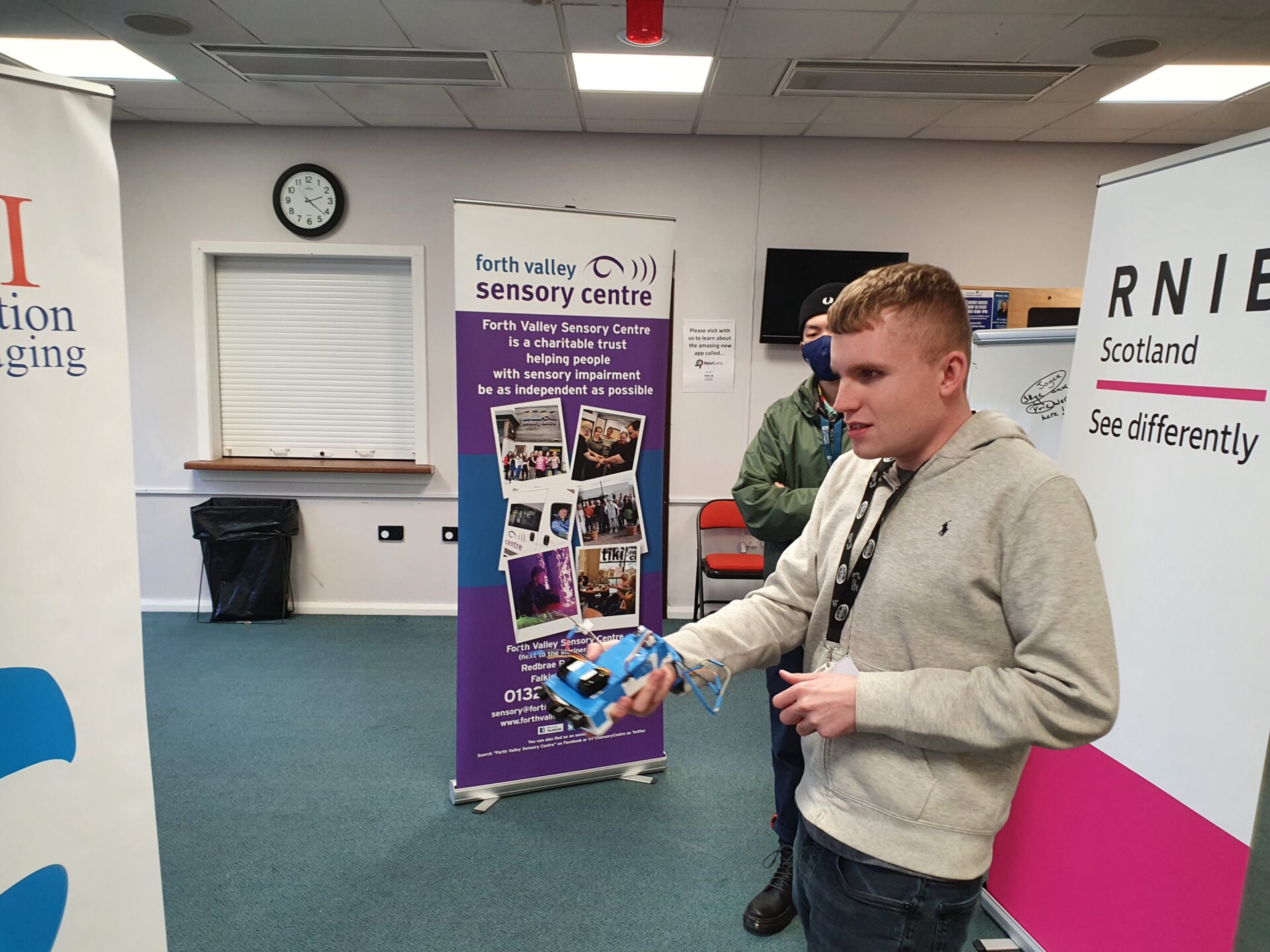
As well as Pepper, the CSI team, led by Dr Wasim Ahmad also demonstrated a new ‘smart cane’ which helps blind and partially sighted people identify objects using special sensors and vibration technology to alert them to possible obstructions, including other people.
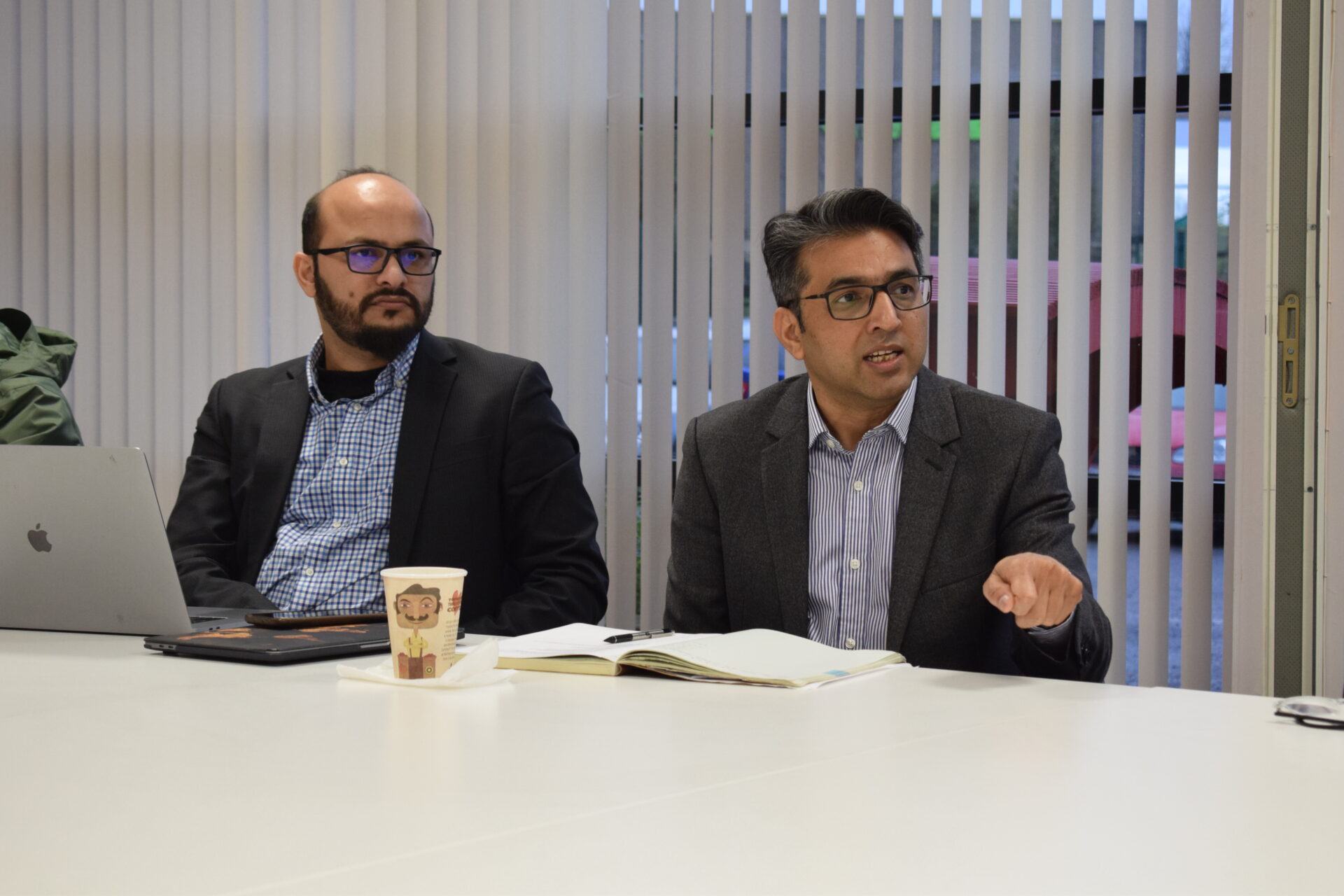
Both technologies were demonstrated by their respective research students, Jingyan Wang (Pepper) and Liyuan Qi (Smart cane). Dr Wasim Ahmad, Dr Qammer Abbasi (deputy head for CSI group) also led a discussion on assistive technology and asked about other themes it might be useful to develop.
Dr Wasim Ahmad explained:
“Accessibility is a huge part of today’s society. Technology has progressed at a phenomenal pace in the last few decades but accessibility has not always developed alongside it. One of the things we are doing as part of this work is finding out what the needs of people with sensory conditions are and looking at potential solutions to the challenges they are faced with on a daily basis.”
CSI Research Group head, Prof. Muhammad Imran added:
“Digital exclusion is a big challenge for certain sections of our society, especially the blind and partially sighted community members with accessibility challenges. Our vision is to change this landscape by making the future technologies accessible to all sections of our society equitably. We aim to ensure connectuvity solutions of the future and the innovations in sensing and imaging can serve the needs of our digitally excluded society members. The projects demonstrated in collaboration with the Forth Valley Sensory Centre are a showcase of CSI innovations that will have huge impact on the society.”
Forth Valley Sensory Centre Chief Executive, Jacquie Winning MBE added:
“Mobility is a big issue for the blind and partially sighted community. We saw during the pandemic huge issues with people struggling to social distance and stores being fearful of assisting blind people to shop. Pepper is a wonderful solution to that problem and we are delighted Dr Wasim and his team were able to bring this innovative, creative robot to Forth Valley.
“Similarly, the white cane is a symbol of blindness that many recognise but sadly, lots of people don’t respect. Pavement parking, street furniture or simply walking along staring at our phones, all result in bumps and accidents for blind people who are subject to a mental and physical assault course whenever they leave home.
“People describe the white cane as an obstacle finder, the user must hit the object they need to avoid before they can move around it. This can lead to confrontation, with Centre Users having been verbally abused for bumping into vehicles parked on the pavement. We hope that full trials of both these technologies will prove fruitful and be a great benefit to the blind and partially sighted community.”
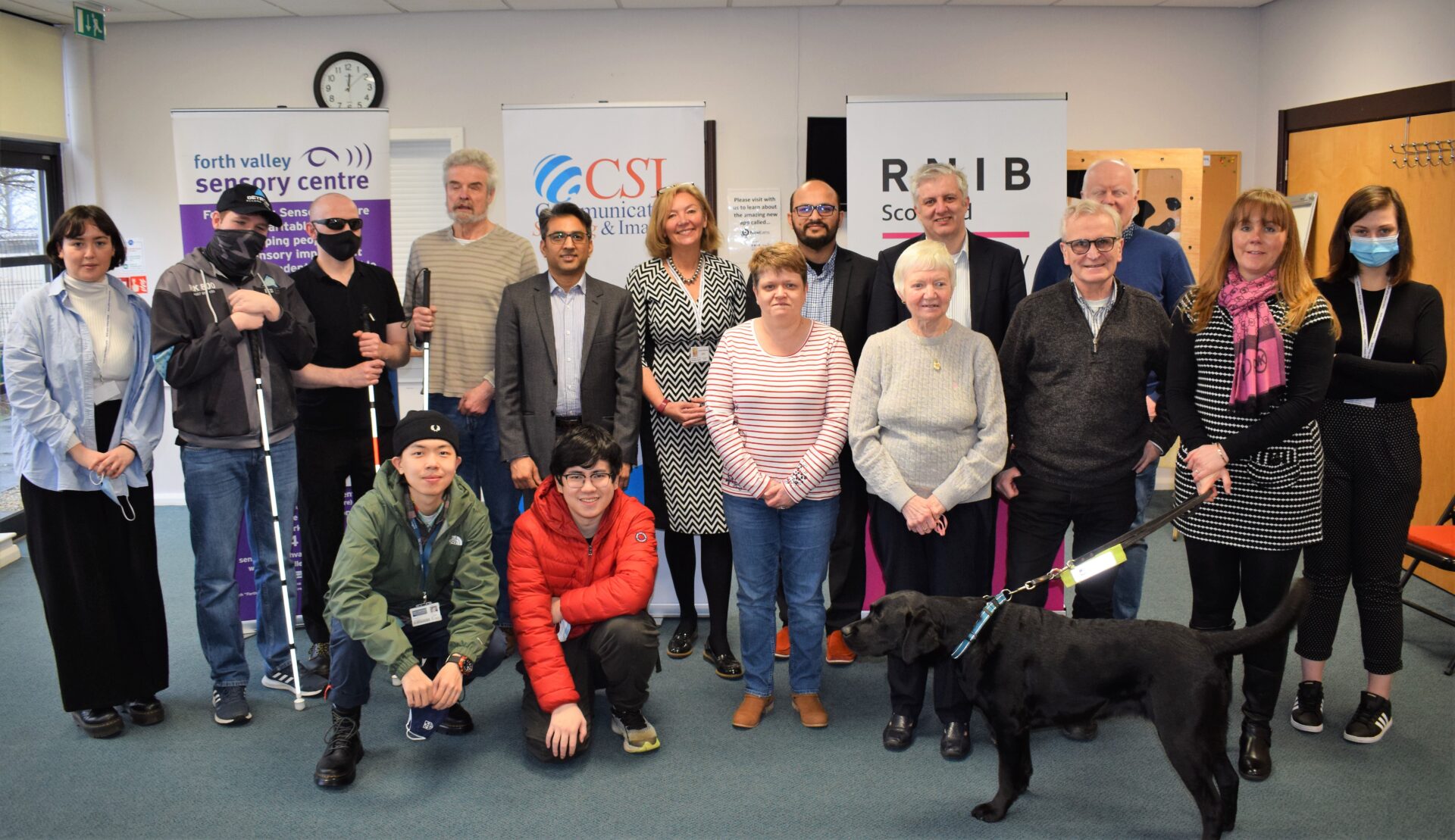
The demonstration event was supported by RNIB Scotland and its Haggeye youth forum for blind and partially sighted young people. Several Haggeye members were able to come along and try the different devices
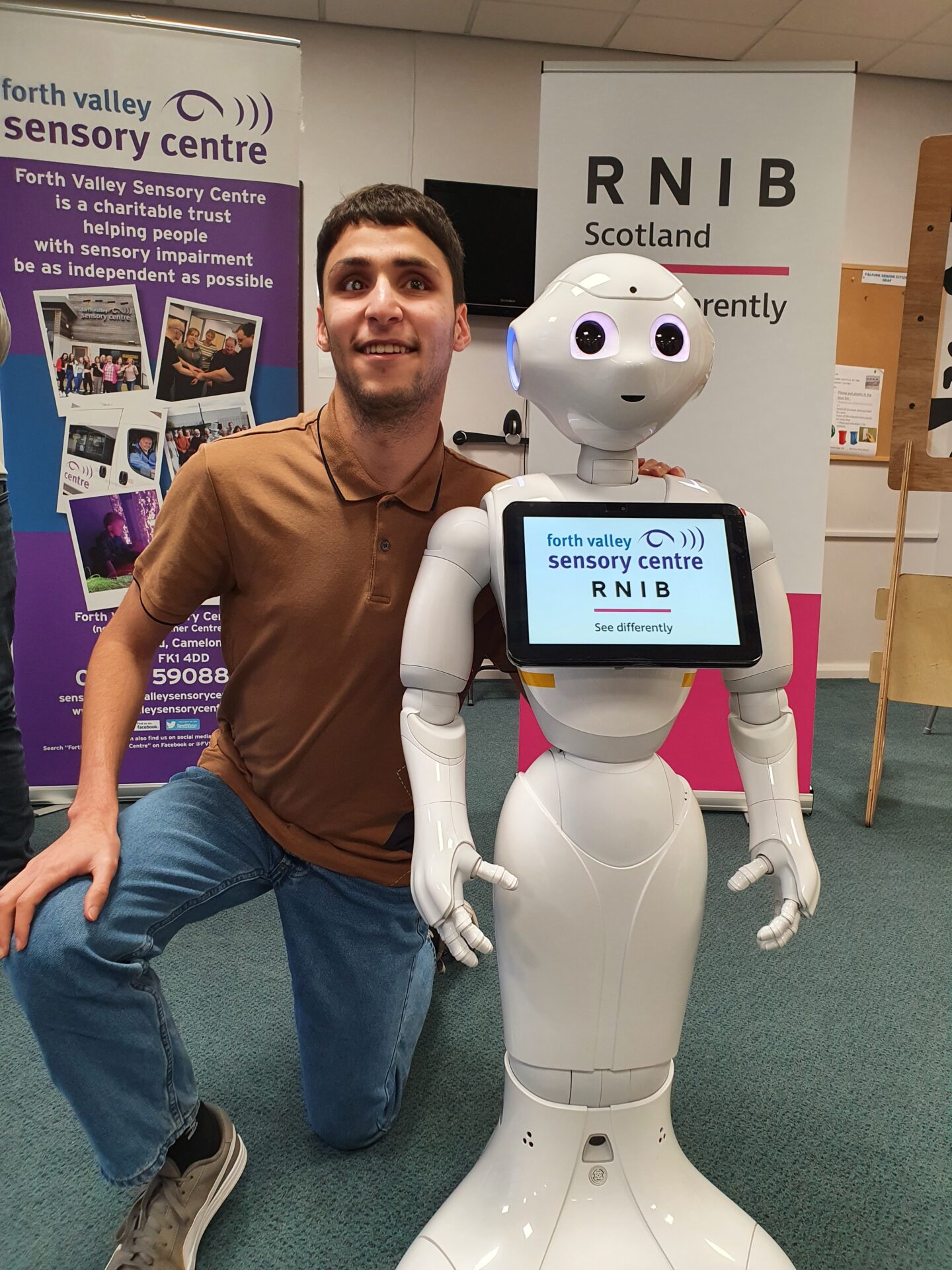
Centre User, Kyle Somerville, 20, from Falkirk who is blind, tried out Pepper and thought the concept really had potential. Kyle said:
“Pepper is really cool. He was very easy to follow and the humanoid design is very interesting. I don’t know if everyone will like it and I can imagine the first ones attracting a lot of attention from the public but it is an amazing concept. I’ve heard about ideas for robot Guide Dogs before but to actually meet a device like that was brilliant. It would be very useful when visiting a new or different place. The future is definitely technology.”
James Adams, Director, RNIB Scotland commented:
“Technological innovations have been of huge benefit to people with sight loss. RNIB has been at the leading edge of this through our partnerships with Amazon and other global companies, helping to develop assistive or accessible technology.
“Alongside this, we have campaigned for years to help all disabled people and others by asking for pavement parking to be banned and for street furniture, notice boards, café seating and other obstacles to be better regulated. These new devices demonstrated today solve very real world problems, and we look forward to hearing more as they continue their development.” It is hoped that following the success of this demonstration that the CSI Research Group will be able to demonstrate their work to assist the deaf community too. Forth Valley Sensory Centre is always keen to explore new ways to increase equality and accessibility for the sensory community. You can find out more about the CSI Research Group on the Glasgow University website here www.gla.ac.uk/research/az/csi/ or follow @uofgcsi, information on Haggeye and RNIB here www.rnib.org.uk/scotland/youth-engagement
0 comments on “Guiding the Future” Add yours →